
Inside Zipline: Lessons in Building Healthcare at Scale
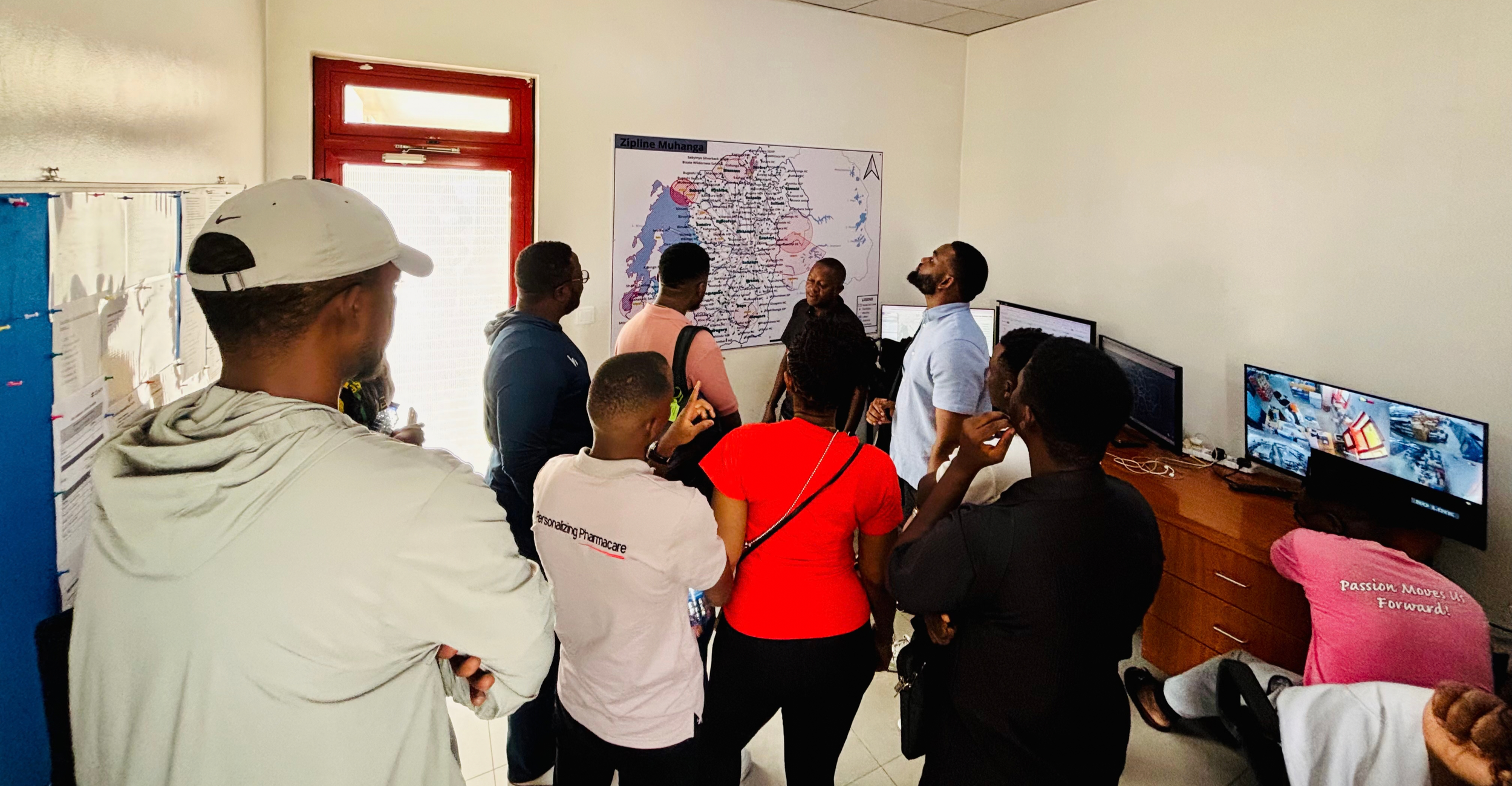
African Impact Initiative Cohort 6 founders visit Zipline’s Kigali facility during their ecosystem tour in Rwanda.
September 2026 | Photo: African Impact Initiative.
Our 9 founders of African Impact Initiative Cohort 6 made an ecosystem tour stop at Zipline, to see what it actually takes to deliver healthcare solutions at scale in Kigali.
The story starts in 2016, when Rwanda became home to the world's first national drone delivery service. Today Zipline serves hundreds of health facilities, moving blood, vaccines, animal health products, and over 200 types of medicine to hard-to-reach communities. Nearly 2 million deliveries later, they're expanding again. A 2026 agreement with the Government of Rwanda takes them to nationwide coverage, with a new hub in Karongi and Africa's first urban drone delivery network right here in Kigali.
The first thing our founders noticed was that they don't talk about themselves as a delivery company, in fact there was huge discomfort because it pales in comparison to the scale of their work. There's warehousing, emergency response, cold storage, operations, and data support behind every drop. And when we asked about competition, the answer wasn't about rivals. They said they're moved by a deep care for the people and communities who depend on them.
That care shows up in the discipline. Every delivery is run like a military mission, with turnaround time as the number they watch, because this service is critical to life for hundreds of thousands of Rwandans every year.
The numbers behind it was beyong humbing for us.
7% reduction in blood wastage across care facilities
56% reduction in maternal mortality caused by postpartum haemorrhage.
42% drop in missed immunization opportunities,
22% drop in child deaths from malnutrition, and a 17% rise in farmer incomes
There was a tonne of questions, but four things stayed with us.
Policy and builders walking together. Zipline worked with the government to shape drone regulations that have since influenced the industry across the countries they operate in. It's a testament to the forward-thinking leadership of the Rwandan government.
Trust is earned, not assumed. Imagine drones flying over your home every single day in rural Rwanda. Zipline built acceptance by reporting their impact openly and by bringing children and grandchildren into the facility, inspiring a new generation toward STEM careers. The road to settling in hit many hurdles. The resilience was inspiring.
Care that goes beyond the obvious. As part of their CSR, they deliver sanitary products by drone to communities and schools. One student told them her period meant weeks out of school. Technology, meeting a very human need.
Data as a national asset. Five years of weather patterns collected across Rwanda now inform climate-smart agriculture. Combined with government baseline data, Zipline can also see how healthcare products are consumed across primary health centres.
Their talent story is just as strong. In partnership with CMU, they work with 300+ engineers, and 40% of them come through education and university partnerships.
And the question on every founder's mind: what about AI? Zipline uses it for data analysis (it has quickly replaced complex pivot tables), for extending drone lifespan, and even for the "mundane" work of shift planning, forecasting traffic and drone deployment.
The takeaway for our founders: scale in critical sectors is built on precision, patience, partnerships, and a genuine love for the people you serve.
Thank you to the Zipline team for opening your doors, and to Kigali for showing what's possible when African innovation meets ambition.
